Case Study
Data wrangling at 200mph
Producer, AdAM Horner
“A production pit crew”
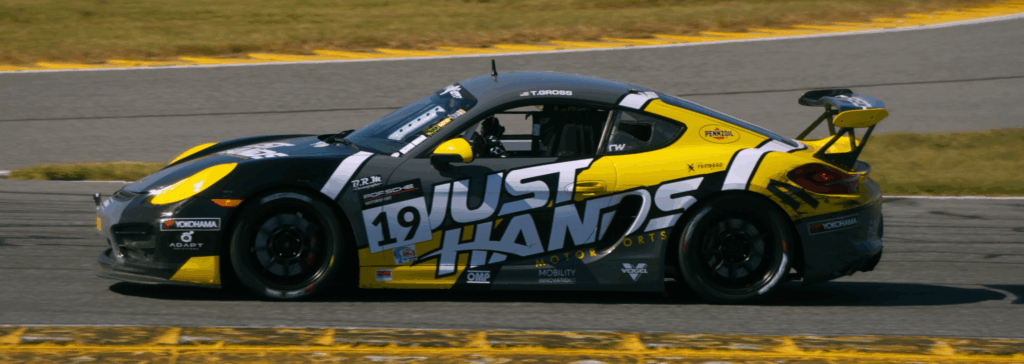
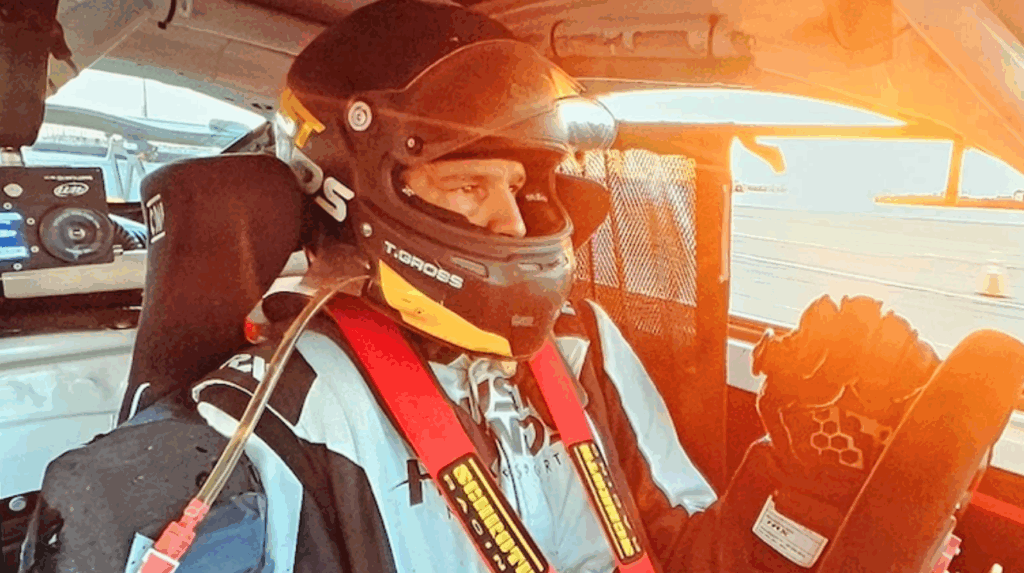
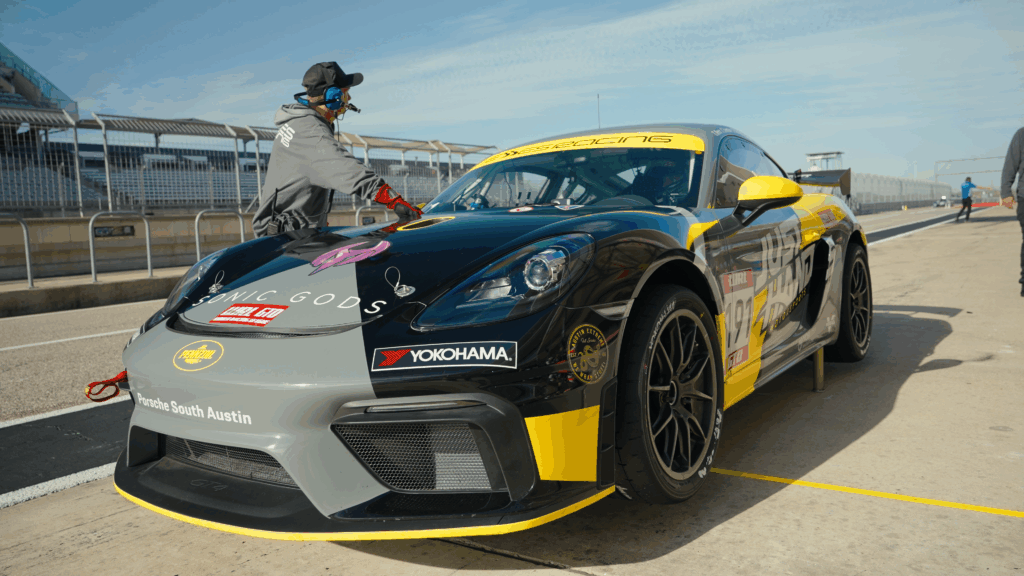
Led by producer Adam Horner, Sonic Gods is a versatile studio blending original TV, documentaries, and commercial work. With their latest project Just Hands, a new docuseries premiering on Amazon Prime Video, Adam and his team followed quadriplegic race car driver Torsten Gross on a mission to defy the odds in high-performance GT racing.
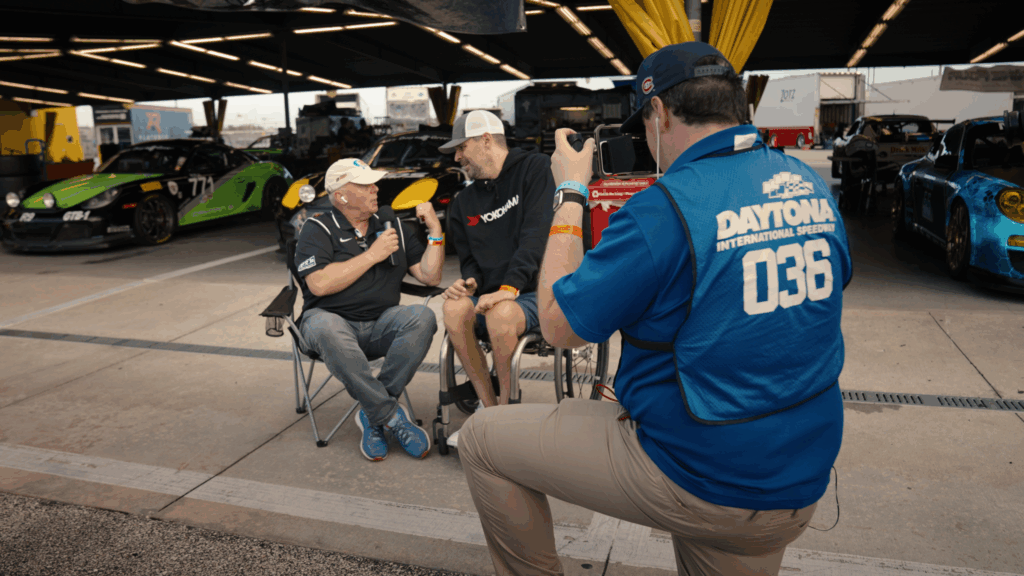
Each shoot day took place in active pit lane environments where space was at a premium. Every corner was spoken for—between crew gear, track operations, and race cars, there was barely room to stand, let alone wheel in a full DIT setup. “A DIT cart would’ve been a luxury,” Adam says. With a five-to-six person crew, they had to be mobile and efficient. Everyone was wearing multiple hats, and for Adam, that also meant handling all the data wrangling himself—on top of producing and working with camera and editorial teams.
Key ingredients of the workflow
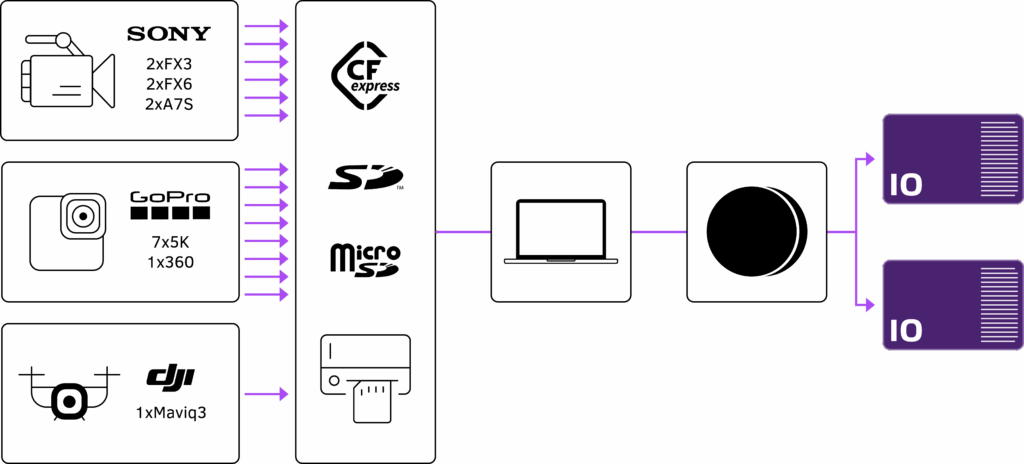
- Main Cameras: Sony FX6, FX3, A7S
- Car Cams: 7x GoPro (5K RAW), GoPro 360
- Drone: DJI Maviq3
- Resolution: Mixed 4K–5K RAW
- Shoot Days: 5–6 days per episode
- Data Load: 2–3TB per day
- Computer: MacBook Pro M1, 14″
- Ingest Drive: iodyne Pro Data
Before iodyne: Long nights and constant risk
Founder and producer Adam Horner is used to adapting to the demands of small to mid-sized productions—juggling creative, technical, and logistical roles on set. So he is familiar with data nightmares and sleepless nights.
“Spinning drives always cause issues on docu-series type projects.”
2-Bay drives died on Adam multiple times. On top of that, the support process, products in stock did not deliver for him. Shooting the first 3 episodes of Just Hands, Adam was running production while wrangling data solo. With 4–6 cameras rolling and spinning drives for storage, every offload was a slow-motion endurance test. “I’d be lucky to get an hour of sleep,” Adam says. He was often still clearing cards while prepping for the next day’s shoot. Hats off to our partner Rich Merritt at Filmtools, who recognized Adam’s pain points and pointed him toward a better answer.
After Pro Data: Hours brought down to minutes
“When Gitig at iodyne told me the read/write speeds, I had to give it a try.” On the first night using it, he offloaded two CFX cards and multiple GoPro SDs—and Adam had to double-check what he was seeing.
“I expected it to take 3 hours. The progress bars were moving in seconds.”
On the second day—a full endurance race shoot—the ingest speeds were so fast, he brought the rest of the crew over just to watch. No drama, no delays, no failed hardware.
The smaller footprint made it ideal for cramped locations, and the speed meant media management no longer ate into rest time. Instead of pulling all-nighters, Adam was getting full sleep and heading into each shoot day ready to go.
The drive that made it happen
⚡ Real-world speed gains: Multi-terabyte offloads finished in minutes, not hours.
🎒 Compact and mobile: Replaced bulky DIT carts with a single unit.
😌 Fewer risks, more sleep: No spinning drives, no failures, no backups holding up production.
🎛️ More focus on story: Freed up time and attention for creative and technical direction.
👥 Crew-tested: Small teams benefited from faster turnaround and less friction.
Ready to level up your workflow?
iodyne Pro Data helped Just Hands stay light, fast, and reliable—even in the high-stress environment of endurance racing. See how it fits into your own production setup.
Other multi-cam projects made with Pro Data

Frequently Asked Questions
What is data wrangling in film and video production?
Data wrangling refers to the on-set management of digital camera footage, including offloading, verifying, backing up, and logging media. A data wrangler works alongside the camera and post-production teams to ensure all footage is safely captured and ready for editing.
What are the data workflow challenges of high-speed motorsport production?
Motorsport productions involve multiple cameras, fast turnarounds between shots, and remote or trackside locations with limited infrastructure. Data wranglers must offload and back up large volumes of footage very quickly under high-pressure conditions.
How did Iodyne Pro Data support a high-speed motorsport production?
In this case study, the production team used Iodyne Pro Data to handle rapid data offloads trackside, where speed and reliability were non-negotiable. Pro Data’s fast transfers and RAID protection allowed the team to keep up with a fast-moving shoot without risking data loss.
What kind of cameras are used in motorsport video production?
Motorsport productions use a combination of cinema cameras, broadcast cameras, onboard cameras, and specialty high-speed cameras. Each produces different file formats and sizes, making a flexible, high-throughput storage solution essential for managing the combined data output.
How portable does data wrangling equipment need to be for location productions?
For location productions like motorsport events, data wrangling equipment must be compact and durable enough to operate in a pit lane or on a vehicle. Iodyne Pro Data’s portable form factor makes it practical for data wranglers working in these demanding environments.