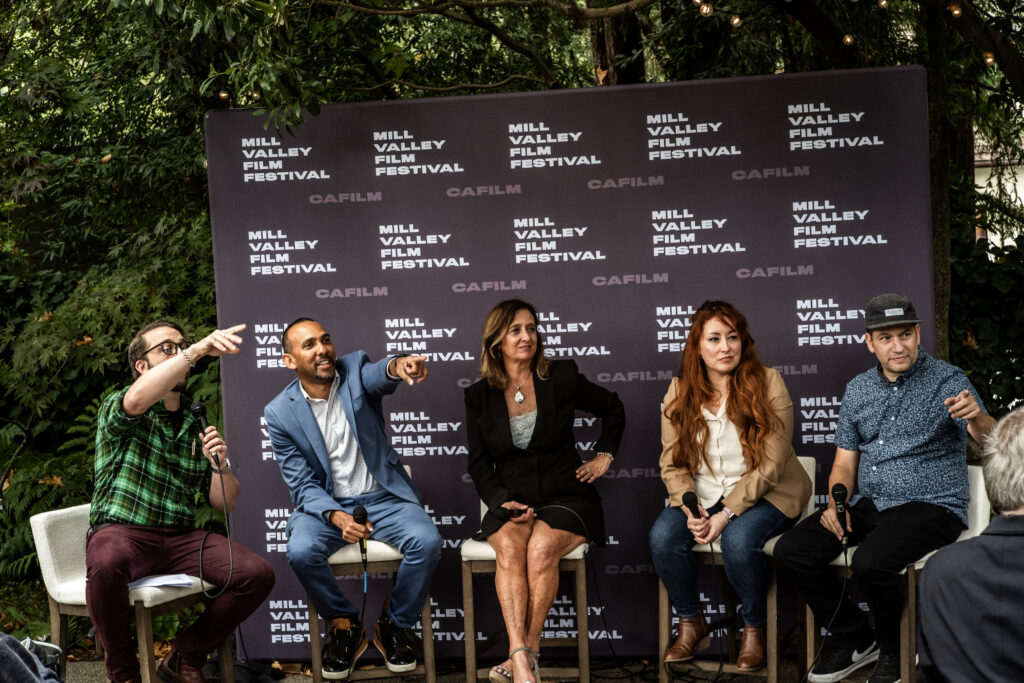
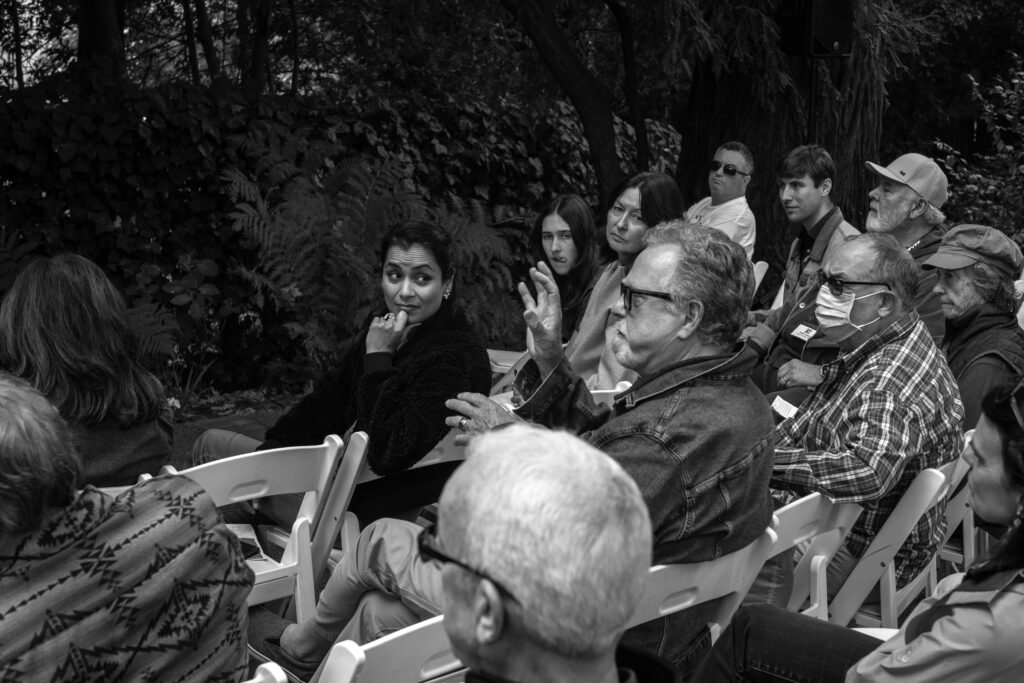
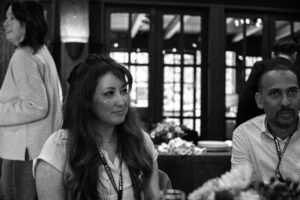
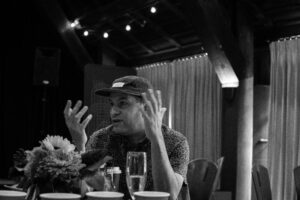
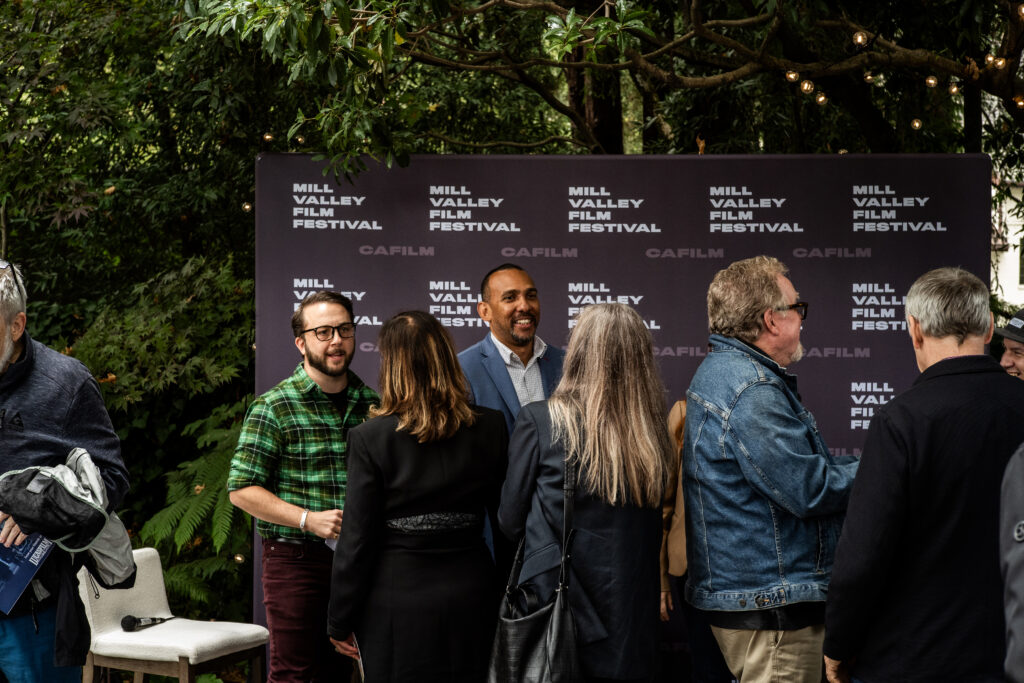
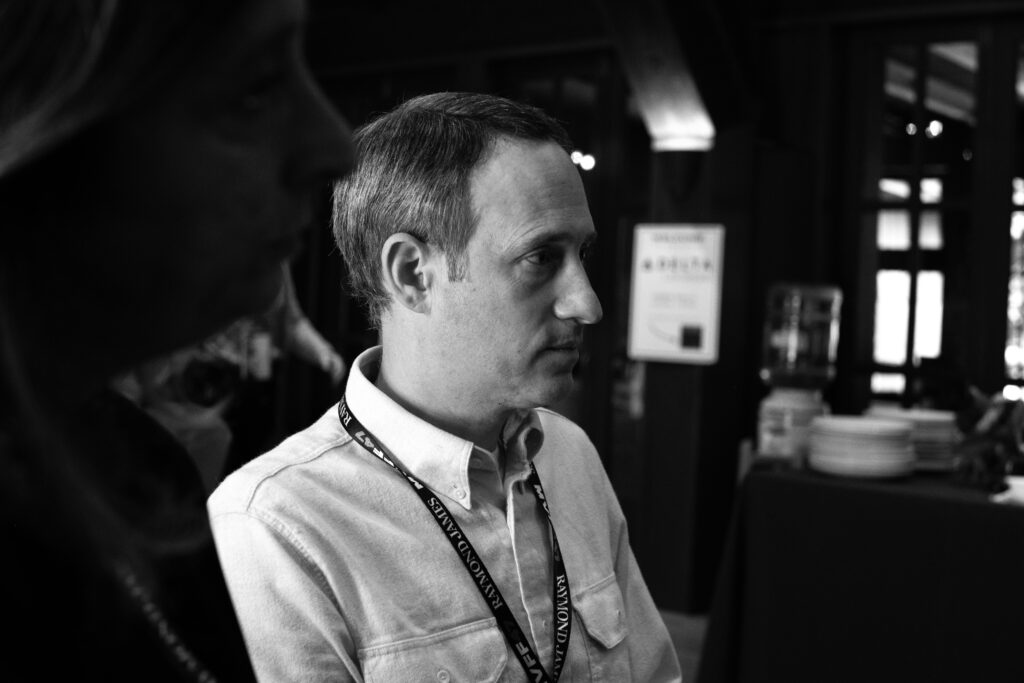
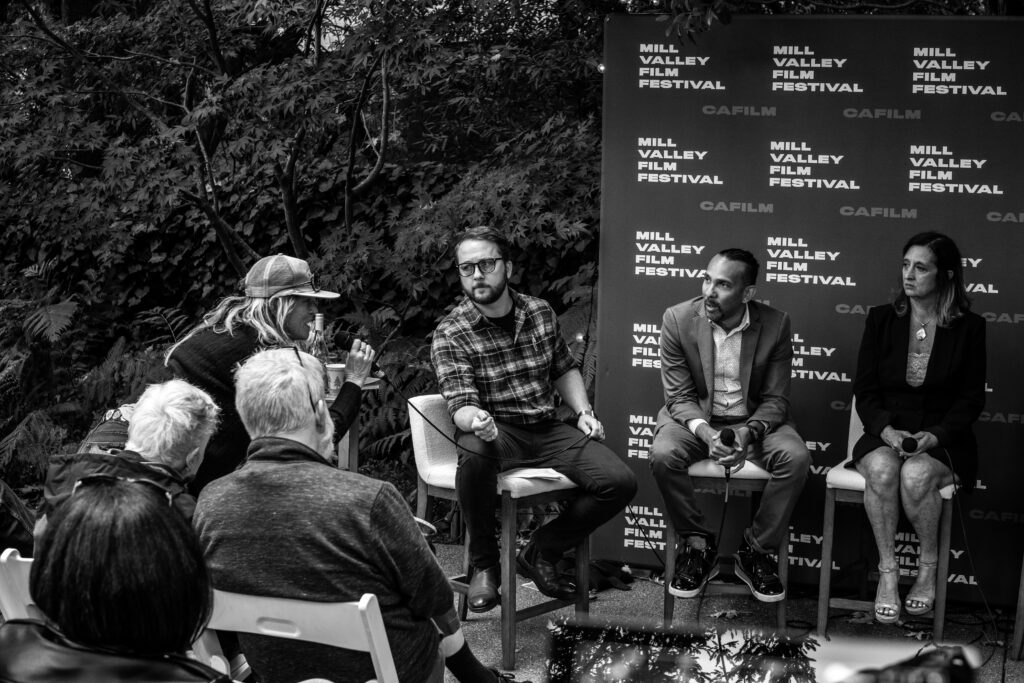
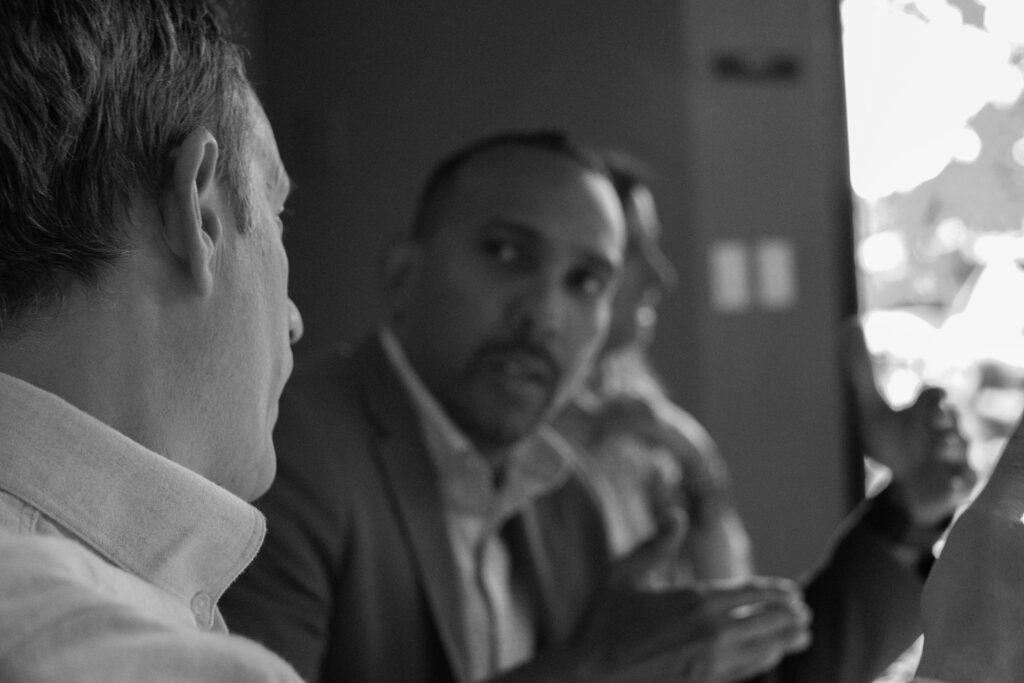
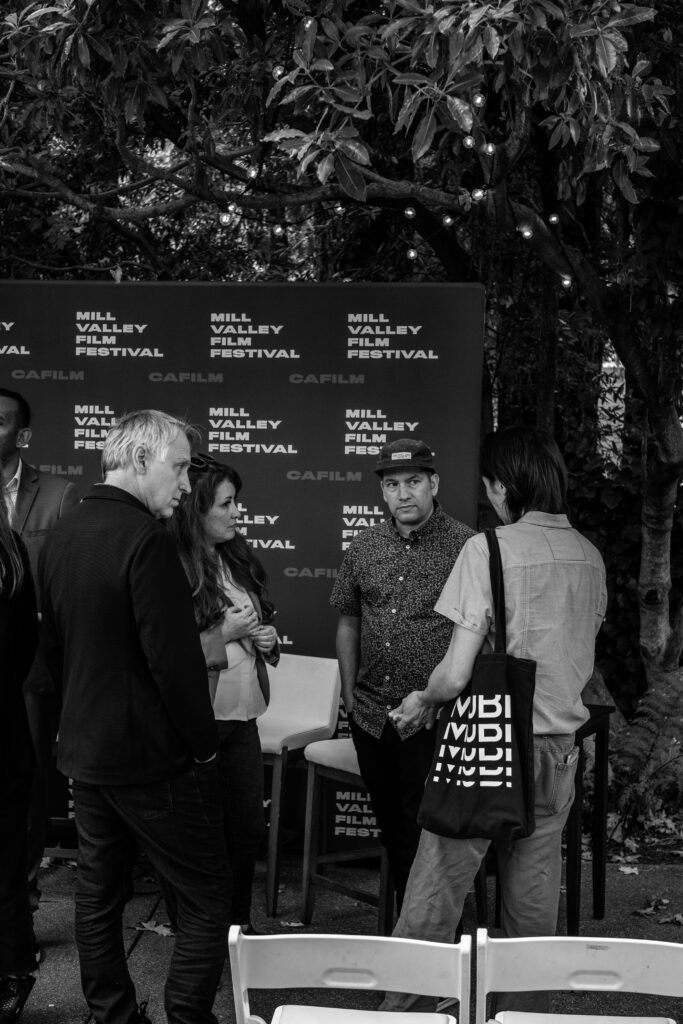
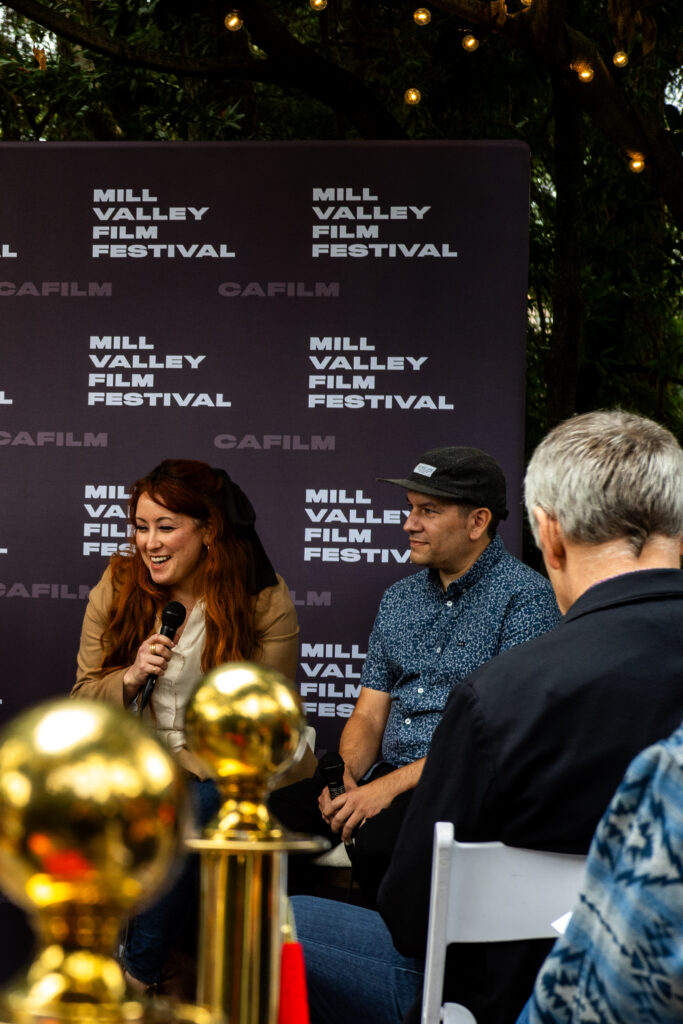
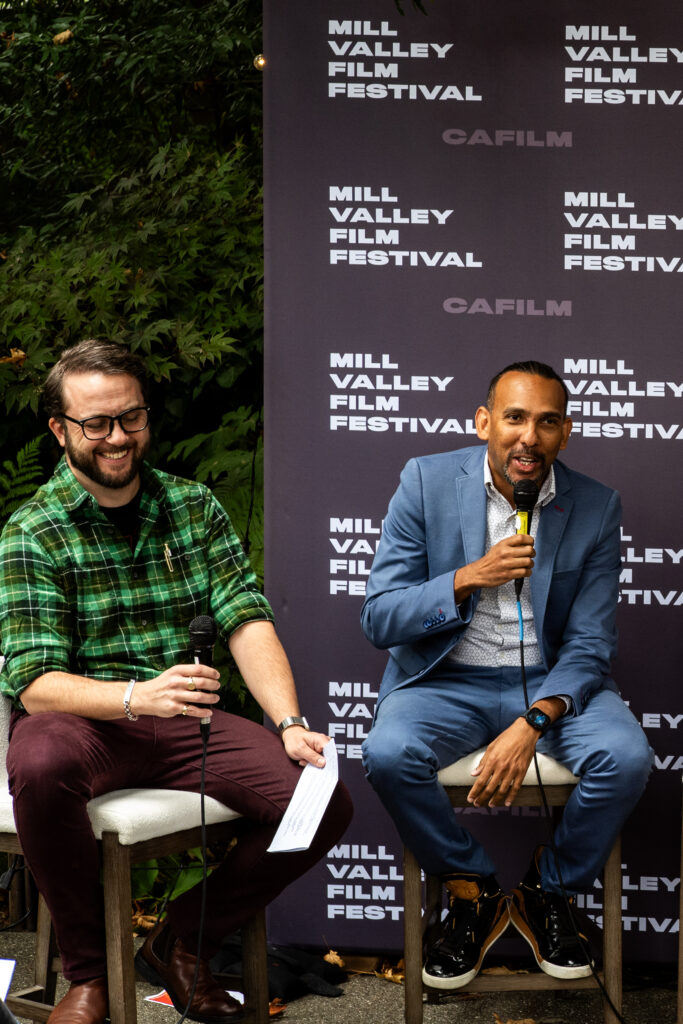
On the heels of last year’s engaging Virtual Storytelling panel, iodyne was thrilled to host its second annual Film Technology panel at the 2024 Mill Valley Film Festival, drilling down on the most vital question facing filmmakers today: how are emerging technologies transforming storytelling across film, television and experiential? Watch below.
In the wake of the pandemic, strikes, and the advent of large-scale AI models, from the largest studio level to the more bespoke needs of independent film, the challenge is both new and inspiring in ways creatives and engineers have never before seen–and iodyne is taking a leading role in both wrangling and securing the eye-popping amounts of data needed in this brave new world.
The expert panel included Jerome Prescod, an Engineering Emmy winner now working at Disney Studio Technology to ensure security while helping creatives push storytelling boundaries, Barbara Karanian, Ph.D., lecturer at Stanford University on how storytelling can fuel innovation and design, Katie Mitchell, Senior Manager of Technical Services and System Engineering at Marvel Studios, and Jim Geduldick, VFX Supervisor who’s steered large projects from series on Apple TV+ to features with Robert Zemeckis.
iodyne’s Director of Workflow, Martin Christien, once again moderated the lively discussion–Mill Valley is also the hometown of iodyne and where the products are being assembled, so it was a short commute.
Pandemic positives?
To kick things off, the panel looked back on which of the technological innovations of necessity from the Covid-19 pandemic time have stuck, now with a few years away from the height of the crisis. “The pandemic really showed that films could be made at a studio level everywhere,” Katie said, drawing on her experience with the MCU on projects such as Black Panther: Wakanda Forever and Shang-Chi. “Being a former film student, you would just have to make a film wherever you could. But then when you go to a studio, you have to make it where you’re being asked to. So the pandemic kind of created this time where it was really exciting where they’re like, okay, now we have to make this. And it’s not the way that we made it a year ago. So make it happen, but make it secure, and make it real fast.”
New technologies were deployed on the fly, with technologists meeting the needs of creatives to tell their stories—Jerome noted the challenge of also needing to keep high value assets secure as they traveled around the world, being shared between far-flung teams. Those short-term pandemic solutions have created some seismic shifts in the very idea of what is possible in how creative and technology can tell stories.
To do things with what you have makes you extremely innovative and do something no one has ever done before.
Diving into the topic of experimental technology, the expert panel discussed how often it’s the creatives themselves who are driving tech, on both the big studio and indie level, demanding new storytelling tools and constantly pushing the boundaries of how to tell those stories. Creatives may sometimes get fearful of tech, but Jerome, who’s now working at Disney Studio Technology, contended that creatives are actually driving the innovation every day: “All we keep doing is try to catch up with you,” he contended. “And catch up with how to deliver that vision.”
Katie piggybacked onto this: “As technologists, we have to provide options as well. So [the creatives] may not think of a workflow that needs to exist. They may not think of a tool that need they need. So we’re always looking at what’s new and what’s available […] does it already exist, or do you have to build it in house?”
Jim, who’s spent much of recent years criss-crossing the globe with creative teams, deploying the latest bit of kit, added: “The technology should always be in service of story. There’s the use of tech for tech sake, and maybe that’s great for marketing and PR of the project at times, but how is it serving that particular filmmaker, that storyteller? […] What a lot of us hope to do is introduce to creative teams, something that is going to make their lives easier or be able to have them get what’s out of their head and on to whichever device it would be a big, projection down to a mobile device or a Vision Pro.”
Technology should always be in the service of story.
“Storytelling as rapid prototyping”
Barbara added another perspective, sharing how the students in her Stanford entrepreneurial storytelling classes come from an engineering or business background and consequently are very tech forward, but how she has them shelve the shiny toys for a moment with a “simple and elegant” approach. She first teaches them the fundamentals and how to connect story face to face with others, foregrounding the importance of storytelling to drive the technology, not vice versa. She views storytelling itself as a way to discover new solutions and paradigms: “I see storytelling as rapid prototyping.”
Whether working on a massive studio picture or a smaller indie production slated for distribution on YouTube, at the end of the day, it doesn’t matter – everyone is trying to figure it out as tech changes by the day. And according to Jim, if the earlier paradigm of being a filmmaker was aspiring to be a Spielberg or Zemeckis, with access to Hollywood budgets, now a lot of creatives have a base level access to Hollywood-level tools and are driven by totally new storytelling and distribution solutions, which are then influencing the studios themselves: “You have very talented creatives who have engaging stories to tell in a lot of different mediums that are purely just on YouTube. They’re not chasing Hollywood. They’re not going after that. And they’re fine with what they’ve curated […] New paradigms have come out and Hollywood goes, ‘Oh, we want a piece of that.’”
Asked by an audience member about whether there’s something that came out in the past year that has been a game changer, Jim weighed in on what he considered to be hype around the AI platforms said: “It’s not getting rid of any of us. It’s not replacing a person. It is assistive. You still need creative artists to take it to that final level, you still need scriptie and production design. It is a marriage of taking the tech with the creative and then getting that magic. It’s just going to help us get things a little bit faster.”
iodyne pushing the limits
Reflecting on a year of whiplash technological change in the industry, Jerome had one final bit to add: “I’ll make a shameless plug because I’ve had the privilege of working with iodyne for a little bit here. I would say that the way they have worked collaboratively with us and a number of other studios [… ] to push the storage capacities,, frankly speaking they’re pushing on levels that we’ve not seen before.” Jerome said. “It’s ‘Can you do it faster, please?’ All the time. So many things we’ve seen done from the iodyne team in the last year has been that they’re understanding what that is.”
Panelist Bios
Jerome Prescod
Jerome Prescod, an Engineering Emmy winner, has been pioneering film and television workflow solutions for nearly 20 years. At Disney’s Studio Technology, he ensures the security of post-production processes while working closely with creatives to push the boundaries of what’s possible in storytelling.
Barbara A. Karanian Ph.D.
As a Lecturer at Stanford University, Barbara Karanian teaches how storytelling can fuel innovation and design. In her 17-year collaboration with Digital Film Tree, she has contributed to groundbreaking approaches in visual storytelling for the film industry. Her leadership in Europe’s Cities Sustainability Group 2030 further illustrates how narrative can drive large-scale transformation, blending creativity with real-world impact.
Kathryn Mitchell
As Senior Manager of Technical Services and System Engineering at Marvel Studios, Kathryn Mitchell ensures that the ambitious creative visions of the Marvel Cinematic Universe (MCU) come to life. Her work has supported the seamless production of Black Panther: Wakanda Forever and Shang-Chi and the Legend of the Ten Rings. By bridging the gap between technology and creative vision, Kathryn ensures that Marvel’s filmmakers can bring their bold, cinematic stories to life without compromise.
Kathryn Mitchell
As Senior Manager of Technical Services and System Engineering at Marvel Studios, Kathryn Mitchell ensures that the ambitious creative visions of the Marvel Cinematic Universe (MCU) come to life. Her work has supported the seamless production of Black Panther: Wakanda Forever and Shang-Chi and the Legend of the Ten Rings. By bridging the gap between technology and creative vision, Kathryn ensures that Marvel’s filmmakers can bring their bold, cinematic stories to life without compromise.
Are you facilitating events for a community of professional media creators, filmmakers, film technologists? We would love to explore a collaboration. Drop us a line [email protected].